
EARTH REALMS
- Shanti

- Aug 26, 2025
- 10 min read
Updated: Jun 15
Global biogeographical realms represent the broadest ecological divisions of Earth’s surface, categorised by distinct evolutionary histories, geographic barriers, and unique species distributions. To structure macro-ecological data and resource management, scientists partition the biosphere into 8 terrestrial realms and 12 marine realms. This macro-regional framework provides critical insights into the distribution of living (biotic) and non-living (abiotic) resources, which are essential for sustainable conservation and geopolitical planning. Because macro-scale boundaries are open and dynamic, all quantified ecological data, resource volumes, and economic values cited across these zones are calculated strictly as provisional estimates.
Global Resource Distribution (Estimated Overview)
Dimension | Living (Biotic) Resources | Non-Living (Abiotic) Resources |
Terrestrial Realms (8 Zones) | Timber, crops, wild fauna, genetic strains, and medicinal plants. | Fresh water, fossil fuels, industrial metals, and rare-earth elements. |
Marine Realms (12 Zones) | Fish stocks, microscopic plankton, kelp forests, and coral ecosystems. | Subsea oil/gas, polymetallic nodules, salt, and tidal energy potential. |
Table 1. Estimated Global Distribution of Living and Non-Living Resources Across Terrestrial and Marine Biogeographical Realms.

Terrestrial Realms
Terrestrial realms span the continents and are isolated by major geographic features like oceans, deserts, or high mountain ranges. These barriers block species dispersal, driving distinct evolutionary lineages and high endemism (Olson et al., 2001)..
Australasian (AA)
Unique isolation breeds marsupials, monotremes, and eucalyptus forests across Australia, New Guinea, and neighboring Pacific islands.
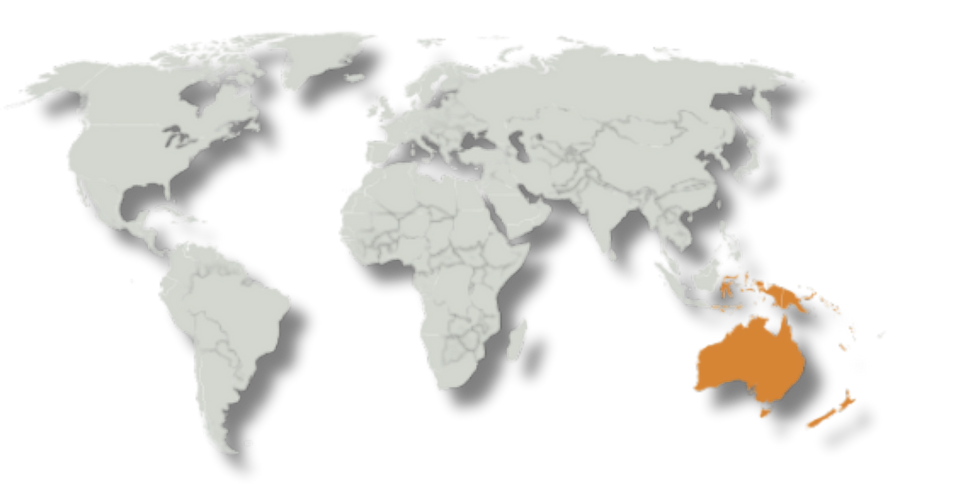
Australasian (AA) recorded and estimated species count
Organism Type | Number of Recorded Species | Estimated Number of Species |
Animal | 106,831 | 434,100 |
Plant | 24,716 | 31,500 |
Fungi | 11,846 | 250,000 |
Table 2 - Recorded and Estimated Species Richness within the Australasian Terrestrial Realm

Antarctic (AN)
Freezing, ice-covered realm including Antarctica and subantarctic islands. Home to penguins, seals, and minimal hardy tundra vegetation.
Antarctic (AN) recorded and estimated species count
Organism Type | Number of Recorded Species | Estimated Number of Species |
Animal | 470 | 550 |
Plant | 306 | 350 |
Fungi | 997 | 2,000 |
Table 3 - Recorded and Estimated Species Richness within the Antarctic Terrestrial Realm
Afrotropical (AT)
Spans Sub-Saharan Africa and Madagascar. Features rich tropical grasslands, diverse megafauna like elephants, and massive rainforests.

Afrotropical (AF) recorded and estimated species count
Organism Type | Number of Recorded Species | Estimated Number of Species |
Animal | 155,000 | 1,200 000 |
Plant | 56451 | 65 000 |
Fungi | 18000 | 380,000 |
Table 4 - Recorded and Estimated Species Richness within the Afrotropical Terrestrial Realm

Indomalayan (IM)
Covers South and Southeast Asia. Dominated by tropical moist forests, tigers, rhinos, Asian elephants, and high biodiversity hotspots
Indomalayan (IM) recorded and estimated species count
Organism Type | Number of Recorded Species | Estimated Number of Species |
Animal | 135,000 | 850,000 |
Plant | 50,000 | 62,000 |
Fungi | 15,000 | 310,000 |
Table 5 - Recorded and Estimated Species Richness within the Indomalayan Terrestrial Realm
Nearctic (NA)
Spans most of North America. Features vast boreal forests, prairies, deserts, and iconic wildlife like grizzly bears, bison, and bald eagles.

Nearctic (NA) recorded and estimated species count
Organism Type | Number of Recorded Species | Estimated Number of Species |
Animal | 115,000 | 165,000 |
Plant | 22,100 | 24,500 |
Fungi | 35,000 | 60,000 |
Table 6 - Recorded and Estimated Species Richness within the Nearctic Terrestrial Realm

Neotropical (NT)
Covers South and Central America. Home to the Amazon rainforest, unmatched biodiversity, jaguars, toucans, and vibrant ecosystems.
Neotropical (NT) recorded and estimated species count
Organism Type | Number of Recorded Species | Estimated Number of Species |
Animal | 185,000 | 1,500,000 |
Plant | 90,000 | 110,000 |
Fungi | 22,000 | 450,000 |
Table 7 - Recorded and Estimated Species Richness within the Neotropical Terrestrial Realm
Oceania (OC)
Volcanic islands and atolls of the Pacific Ocean. Dominated by unique seabirds, marine life, and highly specialized, isolated land species.

Oceania (OC) recorded and estimated species count
Organism Type | Number of Recorded Species | Estimated Number of Species |
Animal | 8,500 | 32,000 |
Plant | 4,200 | 5,500 |
Fungi | 1,800 | 15,000 |
Table 8 - Recorded and Estimated Species Richness within the Oceania Terrestrial Realm

Palearctic (PA)
The largest realm, covering Europe, North Asia, and North Africa. Home to tundra, taiga, temperate forests, wolves, and brown bears.
Palearctic (PA) recorded and estimated species count
Organism Type | Number of Recorded Species | Estimated Number of Species |
Animal | 140,000 | 210,000 |
Plant | 35,000 | 39,000 |
Fungi | 42,000 | 85,000 |
Table 9 - Recorded and Estimated Species Richness within the Palearctic Terrestrial Realm

The Marine (Ocean) Realms
Marine realms partition coastal shelves, pelagic open waters, and deep-sea benthic basins based on temperature, salinity, and depth barriers. The 12 coastal and shelf realms established by the Marine Ecoregions of the World (MEOW) framework are:
Arctic realm (AR)
Freezing shelf seas shaped by seasonal sea ice, home to specialized cold-adapted benthos, key marine mammals, and extensive microbial life.

Arctic (AR) recorded and estimated species count
Organism Type | Number of Recorded Species | Estimated Number of Species |
Animal | 7,600 | 11,000 |
Plant | 150 | 200 |
Fungi | 2,100 | 5,000 |
Table 10 - Recorded and Estimated Species Richness within the Arctic Marine Realm

Temperate Northern Atlantic (TN)
Highly studied, nutrient-rich waters with vast commercial fisheries, extensive estuaries, and dense human coastal development.
Temperate Northern Atlantic (TN) recorded and estimated species count
Organism Type | Number of Recorded Species | Estimated Number of Species |
Animal | 31,000 | 38,000 |
Plant | 800 | 950 |
Fungi | 4,500 | 9,000 |
Table 11 - Recorded and Estimated Species Richness within the Temperate Northern Atlantic Marine Realm
Temperate Northern Pacific (TP)
Cold, dynamic waters famous for massive canopy-forming kelp forests, high salmonid diversity, and complex deep-sea trenches.

Temperate Northern Pacific (TP) recorded and estimated species count
Organism Type | Number of Recorded Species | Estimated Number of Species |
Animal | 28,500 | 36,000 |
Plant | 1,100 | 1,300 |
Fungi | 3,800 | 8,500 |
Table 12 - Recorded and Estimated Species Richness within the Temperate Northern Pacific Marine Realm

Tropical Atlantic (TA)
Warm waters spanning the Caribbean and West Africa, rich in coral reefs, dense mangrove nurseries, and diverse sea turtle species.
Tropical Atlantic (TA) recorded and estimated species count
Organism Type | Number of Recorded Species | Estimated Number of Species |
Animal | 22,000 | 45,000 |
Plant | 650 | 800 |
Fungi | 1,500 | 7,000 |
Table 13 - Recorded and Estimated Species Richness within the Tropical Atlantic Marine Realm
Western Indo-Pacific (WI)
Spans the Red Sea and Western Indian Ocean, featuring high temperature gradients, unique endemics, and massive coral complexes.

Western Indo-Pacific (WI) recorded and estimated species count
Organism Type | Number of Recorded Species | Estimated Number of Species |
Animal | 33,000 | 75,000 |
Plant | 700 | 950 |
Fungi | 12,000 | 11,000 |
Table 14 - Recorded and Estimated Species Richness within the Western Indo-Pacific Marine Realm

Central Indo-Pacific (CI)
The global epicentre of marine biodiversity, anchored by the Coral Triangle's hyper-dense reef networks and thousands of species.
Central Indo-Pacific (CI) recorded and estimated species count
Organism Type3 | Number of Recorded Species | Estimated Number of Species |
Animal | 52,000 | 210,000 |
Plant | 1,400 | 2,100 |
Fungi | 5,000 | 35,000 |
Table 15 - Recorded and Estimated Species Richness within the Central Indo-Pacific Marine Realm
Eastern Indo-Pacific (EI)
Encompasses vast Central Pacific island chains with long isolation distances that drive localized evolution and unique reef life.

Eastern Indo-Pacific (EI) recorded and estimated species count
Organism Type | Number of Recorded Species | Estimated Number of Species |
Animal | 14,000 | 35,000 |
Plant | 400 | 600 |
Fungi | 1,200 | 6,500 |
Table 16 - Recorded and Estimated Species Richness within the Eastern Indo-Pacific Marine Realm
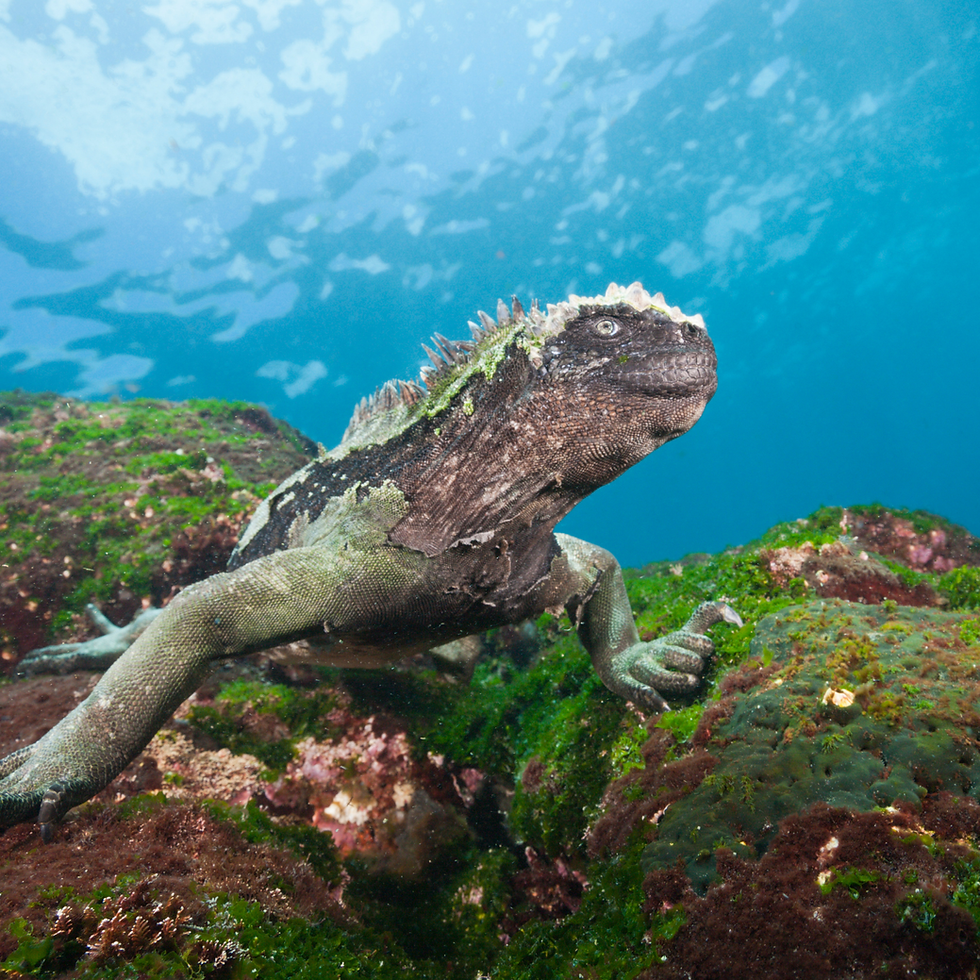
Tropical Eastern Pacific (TE)
Stretches along the Americas; isolated by deep ocean barriers, creating distinct marine endemics and nutrient-rich upwellings.
Tropical Eastern Pacific (TE) recorded and estimated species count
Organism Type | Number of Recorded Species | Estimated Number of Species |
Animal | 9,800 | 18,000 |
Plant | 350 | 500 |
Fungi | 1,100 | 5,500 |
Table 17 - Recorded and Estimated Species Richness within the Tropical Eastern Pacific Marine Realm
Temperate South America (TS)
Swept by the freezing, nutrient-loaded Humboldt Current, driving immense biological biomass and massive pelagic fish stocks.

Temperate South America (TS) recorded and estimated species count
Organism Type | Number of Recorded Species | Estimated Number of Species |
Animal | 8,200 | 14,000 |
Plant | 450 | 600 |
Fungi | 1,300 | 6,000 |
Table 18 - Recorded and Estimated Species Richness within the Temperate South America Marine Realm

Temperate Southern Africa (TF)
A highly dynamic oceanic clash zone where the cold Benguela and warm Agulhas currents meet to create unique marine habitats.
Temperate Southern Africa (TF) recorded and estimated species count
Organism Type | Number of Recorded Species | Estimated Number of Species |
Animal | 12,500 | 22,000 |
Plant | 850 | 1,100 |
Fungi | 1,600 | 7,000 |
Table 19 - Recorded and Estimated Species Richness within the Temperate Southern Africa Marine Realm
Temperate Australasia (TU)
Encircles southern Australia and New Zealand, hosting cold-water reefs where over 80% of species are completely endemic.

Temperate Australasia (TU) recorded and estimated species count
Organism Type | Number of Recorded Species | Estimated Number of Species |
Animal | 24,000 | 55,000 |
Plant | 1,200 | 1,600 |
Fungi | 2,500 | 12,000 |
Table 20 - Recorded and Estimated Species Richness within the Temperate Australasia Marine Realm

Southern Ocean (SO)
Isolated by the fierce Antarctic Circumpolar Current, hosting highly specialized deep-water fish, sea spiders, and massive krill swarms.
Southern Ocean (SO) recorded and estimated species count
Organism Type | Number of Recorded Species | Estimated Number of Species |
Animal | 9,100 | 16,000 |
Plant | 200 | 300 |
Fungi | 1,800 | 6,000 |
Table 21 - Recorded and Estimated Species Richness within the Southern Ocean Marine Realm
Resource Matrix of Marine Regions
The living resources of these marine zones drive global commercial fisheries, supplying millions of tonnes of fish, crustaceans, molluscs, and marine kelp annually. Structurally, the tropical and central Indo-Pacific realms serve as critical biological nurseries via extensive coral reef systems, generating vital tourism and local economic value. [1, 2, 3]
In contrast, the non-living resources of the marine realms are concentrated along continental shelves and deep-sea floors. Marine geologists estimate vast, untapped reserves of offshore oil, natural gas, and polymetallic nodules (rich in manganese, nickel, and cobalt) embedded across deep pelagic basins. Additionally, cold polar realms like the Southern Ocean act as immense physical heat sinks, regulating global climate patterns through deep-water conveyor currents.
Earth’s Realms: A Unified Synthesis
The structural partitioning of the biosphere into 8 terrestrial realms and 12 marine realms provides an indispensable blueprint for mapping the distribution of global wealth and evolutionary heritage. On land, stark physical barriers like mountains and deserts have carved out distinct biological pockets rich in endemic timber, genetic strains, and mineral reserves. Meanwhile, the fluid, interconnected networks of our oceans drive immense migratory biomass, critical coral nurseries, and vast undersea energy assets. Managing these vital spaces effectively requires acknowledging that all current biodiversity metrics and resource boundaries are continuous provisional estimates [1]. As climate shifts and human activities redefine these ancestral borders, this macro-regional framework remains our most effective tool for balancing global conservation efforts with sustainable resource security
References
Antonelli, A., Zizka, A., Carvalho, F. A., Scharn, R., Bacon, C. D., Silvestro, D., & Condamine, F. L. (2018). Amazonia is the primary source of Neotropical biodiversity. Proceedings of the National Academy of Sciences, 115(23), 6034-6039. doi.org |
Chapman, A. D. (2009). Numbers of living species in Australia and the world (2nd ed.). Australian Biological Resources Study. dcceew.gov.au |
Costello, M. J., Tsai, P., Wong, P. S., Cheung, A. K. L., Basher, Z., & Chaudhary, C. (2017). Marine biogeographic realms and species endemicity. Nature Communications, 8(1), 1057. doi.org |
Costello, M. J., Tsai, P., Wong, P. S., Cheung, A. K. L., Basher, Z., & Chaudhary, C. (2017). Marine biogeographic realms and species endemicity. Nature Communications, 8(1), 1057. doi.org [1, 2] |
de Jesus-Silva, J. G., Convey, P., Rosa, L. H., Newsham, K. K., Villaescusa, J. A., de Carvalho, E., ... & Carvalho-Silva, M. (2024). TerrANTALife 1.0: A comprehensive checklist of known Antarctic terrestrial and freshwater biodiversity. Biodiversity Data Journal, 12, e106199. doi.org [1] |
European Environment Agency. (2020). State of nature in the EU: Results from reporting under the nature directives 2013–2018. EEA Report No 10/2020. |
Forzza, R. C., Costa, A., Walter, B. M., Martinelli, G., Lima, H. C., Hopkins, M., ... & Stehmann, J. R. (2012). New galling data from the Brazilian flora reveals immense Neotropical wealth. Biodiversity and Conservation, 21(14), 3419-3435. |
Keppel, G., Morrison, C., Hardcastle, J., Thomas, N. T., & Rounds, I. A. (2012). Conservation in isolation: Biodiversity priorities on Pacific islands. Environmental Conservation, 39(3), 241-255. |
Kingsford, R. T., Watson, J. E., Lundquist, C. J., Faxneld, S., Peter, R. E., ... & Hermoso, V. (2009). Major conservation challenges of the Pacific region. Conservation Biology, 23(4), 834-840. doi.org [1] |
Myers, N., Mittermeier, R. A., Mittermeier, C. G., da Fonseca, G. A., & Kent, J. (2000). Biodiversity hotspots for conservation priorities. Nature, 403(6772), 853-858. doi.org |
NatureServe. (2024). Biodiversity indicators and species status assessments for North America. natureserve.org |
Olson, D. M., Dinerstein, E., Wikramanayake, E. D., Burgess, N. D., Powell, G. V., Underwood, E. C., ... & Kassem, K. R. (2001). Terrestrial ecoregions of the world: A new map of life on Earth. BioScience, 51(11), 933-938. doi.org[0933:TEOTWA]2.0.CO;2 |
Olson, D. M., Dinerstein, E., Wikramanayake, E. D., Burgess, N. D., Powell, G. V., Underwood, E. C., ... & Kassem, K. R. (2001). Terrestrial ecoregions of the world: A new map of life on Earth. BioScience, 51(11), 933-938. doi.org[0933:TEOTWA]2.0.CO;2 [1, 2, 3] |
Olson, D. M., Dinerstein, E., Wikramanayake, E. D., Burgess, N. D., Powell, G. V., Underwood, E. C., ... & Kassem, K. R. (2001). Terrestrial ecoregions of the world: A new map of life on Earth. BioScience, 51(11), 933-938. doi.org[0933:TEOTWA]2.0.CO;2 [1] |
Raven, P. H., & Heft, J. (2020). The distribution of biodiversity richness in the tropics. Annals of the Missouri Botanical Garden, 105(3), 411-417. doi.org [1] |
Sodhi, N. S., Koh, L. P., Brook, B. W., & Ng, P. K. (2004). Southeast Asian biodiversity in crisis. Trends in Ecology & Evolution, 19(12), 654-660. doi.org |
Spalding, M. D., Fox, H. E., Allen, G. R., Davidson, N., Ferdaña, Z. A., Finlayson, M. A. X., ... & Lourie, S. A. (2007). Marine ecoregions of the world: a bioregionalization of coastal and shelf areas. BioScience, 57(7), 573-583. doi.org |
Spalding, M. D., Fox, H. E., Allen, G. R., Davidson, N., Ferdaña, Z. A., Finlayson, M. A. X., ... & Lourie, S. A. (2007). Marine ecoregions of the world: a bioregionalization of coastal and shelf areas. BioScience, 57(7), 573-583. doi.org [1, 2, 3, 4] |
Stein, B. A., Kutner, L. S., & Adams,J. S. (Eds.). (2000). Precious heritage: The status of biodiversity in the United States. Oxford University Press. [1] |
UNESCO-IOC. (2024). Ocean Biodiversity Information System (OBIS). Intergovernmental Oceanographic Commission of UNESCO. obis.org |
van Noort, S., Meier, R., & Rasplus, J. Y. (2024). Division of the Afrotropical realm into subrealms based on hyper-diverse insect distributions. Systematic Entomology, 49(2), 201-218. [1, 2] |
Wikramanayake, E., Dinerstein, E., Loucks, C. J., Olson, D. M., Morrison, J., Lamoreux, J., ... & Hedao, P. (2002). Terrestrial ecoregions of the Indo-Pacific: A conservation assessment. Island Press. |
Costello, M. J., Tsai, P., Wong, P. S., Cheung, A. K. L., Basher, Z., & Chaudhary, C. (2017). Marine biogeographic realms and species endemicity. Nature Communications, 8(1), 1057. doi.org |
Spalding, M. D., Fox, H. E., Allen, G. R., Davidson, N., Ferdaña, Z. A., Finlayson, M. A. X., ... & Lourie, S. A. (2007). Marine ecoregions of the world: a bioregionalization of coastal and shelf areas. BioScience, 57(7), 573-583. doi.org |
Tags

Comments