
Australasia (AA)
- Shanti

- Jun 18, 2025
- 7 min read
Updated: Jun 15
The Australasia (AA) realm is a diverse region of Oceania, including Australia, New Zealand, New Guinea, and numerous islands in the Pacific Ocean. It is known for its unique geography, rich cultural heritage, and complex ecosystems.
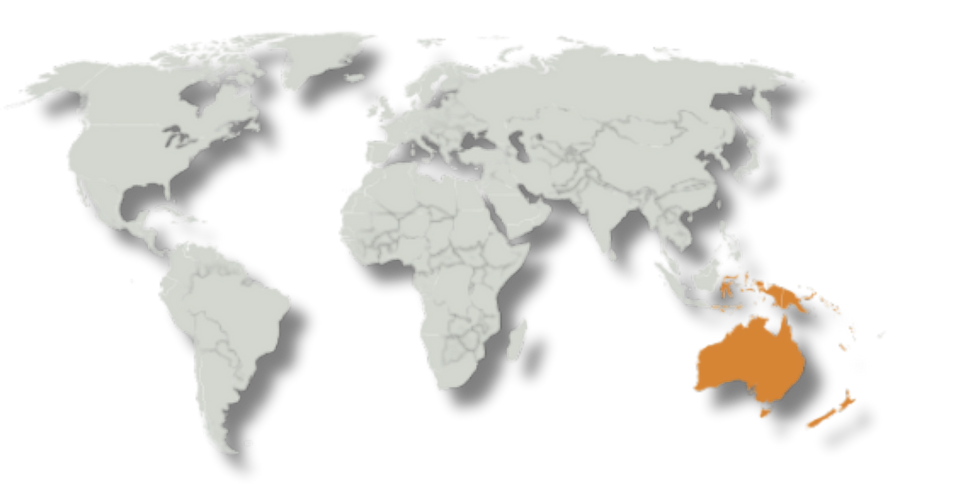
Mapping the Biodiversity Hotspots of the Australasia (AA) Realm
The Australasian realm is a mosaic of unique environments divided into highly distinct sub-realms. Australia itself contains seven bioregions, transitioning from vast central deserts and northern tropical savannas to southern Mediterranean woodlands and eastern temperate forests that stretch down to Tasmania. Nearby, New Zealand’s isolated ecosystems range from dense forests to sprawling grasslands, sustaining both unique native species and agricultural systems. Completing the realm, the Australasian Islands and East Indonesia—including Papua and Sulawesi—serve as a critical sanctuary for exotic birds and marine life, making the region a global priority for marine conservation and research.
Species Diversity Across Key Australasian Countries
Country | No. of Known Species | No. of Estimated Species | Primary Source Evidence / Context |
Australia | 151,000 | 566,000–600,000 | Australian Government (DCCEEW) documents roughly 75% of biodiversity remains completely unknown. |
Indonesia | 175,000 | 1,486,000 | Ecology Prime (Indonesia) highlights it as an ultra-diverse transition zone with a staggering number of unknown fungi and insects. |
Papua New Guinea | 200,000 | 400,000+ | Official CBD Profiles estimate more than half of its rugged montane and rainforest species have yet to be named. |
New Zealand | 65,000 | 80,000+ | High terrestrial bird and plant cataloging exists, but deep-water marine species and soil invertebrates remain largely unmapped. |
New Caledonia | 15,000 | 25,000+ | Highly researched due to extreme localized botanical and micro-endemic profiles, yet dense rainforest canopies hide many species. |
Solomon Islands | 10,000 | 20,000+ | Archipelagic marine life is thoroughly documented, whereas deep island interior insects and micro-fauna remain poorly surveyed. |
Vanuatu | 6,500 | 12,000+ | Volcanic networks and younger island chronologies exhibit moderate overall diversity but high localized species estimation. |
Timor-Leste | 5,000 | 9,000+ | Drier seasonal deciduous zones feature a narrower scope of species, but modern regional field surveys continue to find new entries. |
The Australian sub-realm is divided into seven bioregions, each with distinct environmental characteristics. The central bioregion features vast deserts, while the southern areas have coastal Mediterranean woodlands. To the north, tropical savannas, and the east has temperate grasslands and coastal forests extending to Tasmania.
The New Zealand sub-realm boasts diverse ecosystems, from dense forests to grasslands, supporting native wildlife and agriculture. The Australasian Islands & East Indonesia sub-realm includes Papua, Sulawesi, and other islands known for their unique biodiversity, including exotic birds and marine life. The region is crucial for ocean biodiversity, housing thousands of marine species and serving as a vital area for conservation and research.

Australia (AU)
Australia, the largest landmass within the Australasia (AA) realm, features highly endemic biodiversity shaped by millions of years of geographic isolation.
Australia
Australia's vast landmass spans seven distinct bioregions, each defined by starkly contrasting environmental conditions. The hyper-arid interior features sprawling sandy deserts dominated by drought-resistant spinifex grasses and specialized reptiles. Flanking this dry core are northern tropical savannas, southern Mediterranean coastal woodlands, and eastern temperate forests. This isolation has fostered an ecosystem where 87% of mammals are endemic. Marsupials like kangaroos and koalas dominate the landscape alongside over 24,000 native plant species, notably iconic Eucalyptus and Acacia.
Indonesia (ID)
Indonesia bridges two biogeographic zones, with its eastern islands and Wallacea forming a critical transition zone into the Australasia (AA) realm

Indonesia (East/Wallacea)
The eastern islands of Indonesia, situated within the Wallacea transition zone, represent a spectacular evolutionary crossroads where Asian and Australasian species meet. This fractured archipelagic environment includes Sulawesi, the Moluccas, and the Lesser Sunda Islands, which are covered in a mix of seasonal monsoon forests and dense tropical rainforests. The region exhibits extreme insular endemism. Distinctive fauna include the venomous Komodo dragon, the babirusa pig-deer, and the dwarf buffalo, alongside thousands of unique orchid species and highly localized lowland dipterocarp trees.
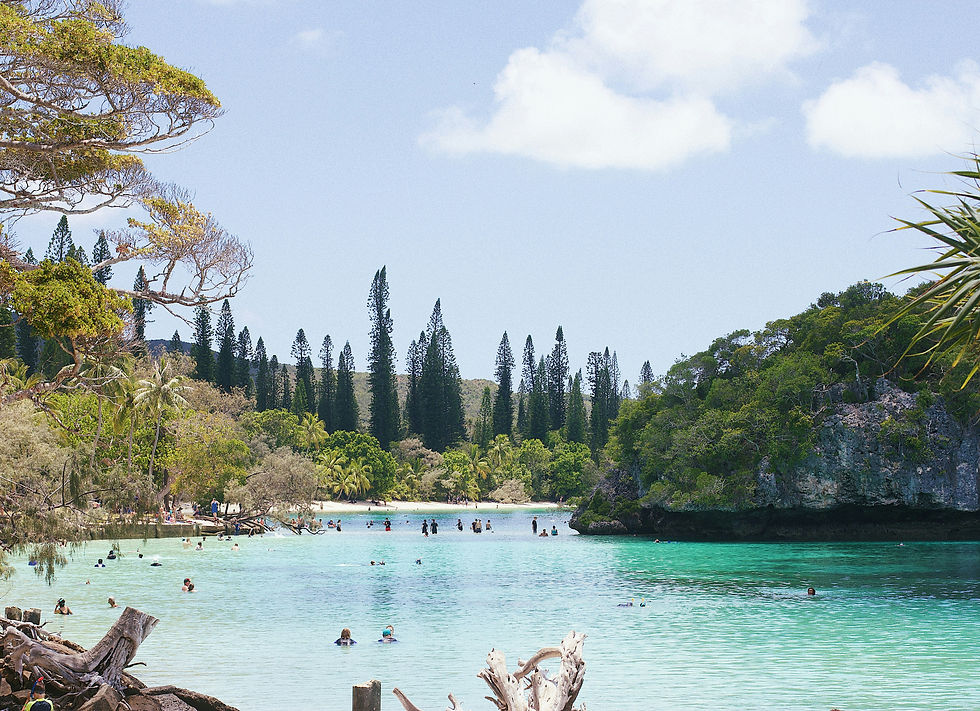
New Caledonia (NC)
New Caledonia, a Gondwanan fragment in the Australasia (AA) realm, possesses extraordinary botanical endemism preserved by long geographic isolation
New Caledonia
New Caledonia is a globally recognized botanical jewel box preserved by millions of years of strict geographic isolation. The main island features a unique geology rich in heavy metals, which has driven the evolution of highly specialized, ultra-endemic plant communities capable of surviving on toxic ultramafic soils. Over 75% of its 3,200 native plant species are found nowhere else on Earth, including Amborella trichopoda, the world's oldest surviving flowering plant line. Its dense rainforests also shelter rare endemic avifauna like the tool-using New Caledonian crow.
Norfolk Island (NF)
Norfolk Island, an isolated volcanic territory in the Australasia (AA) realm, preserves a distinct subtropical ecosystem famed for its unique endemic pine
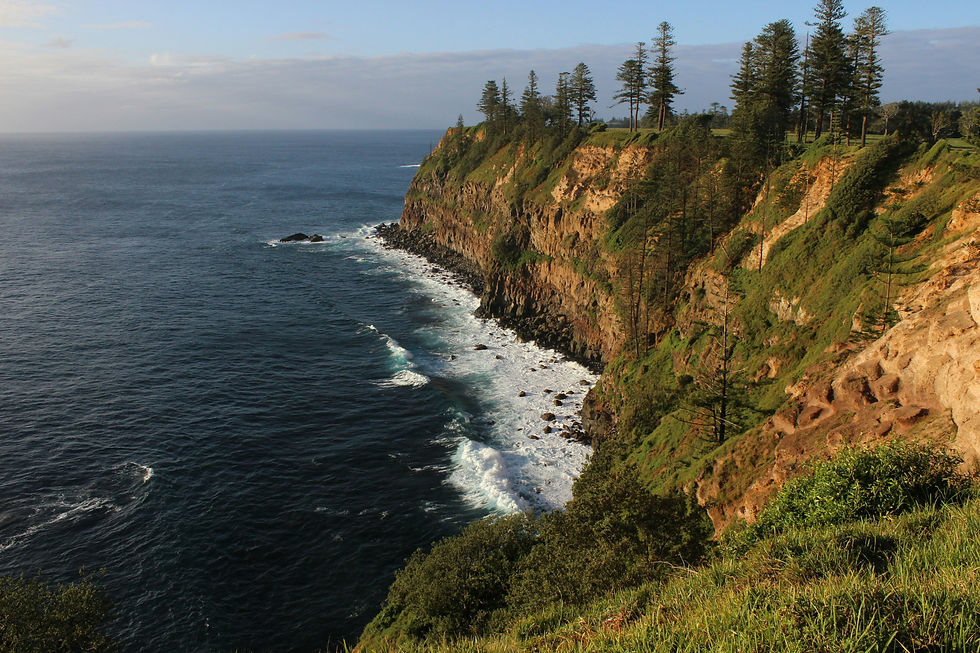
Norfolk Island
Norfolk Island is a tiny, highly isolated volcanic remnant rising from the Pacific Ocean, characterized by a mild subtropical maritime climate. Despite its small geographic footprint, the island developed a highly distinct ecosystem completely free of native terrestrial mammals. Its most famous ecological hallmark is the majestic Norfolk Island pine (Araucaria heterophylla), which dominates the coastal canopy alongside unique tree ferns. The island's isolated forests provide a sanctuary for several critically endangered endemic birds, including the rare Norfolk Island green parrot.

New Zealand (NZ)
New Zealand, an isolated microcontinent in the Australasia (AA) realm, possesses highly endemic biodiversity shaped by millions of years of total isolation
New Zealand
New Zealand is an isolated microcontinental landmass boasting incredibly diverse ecosystems, ranging from snow-capped alpine peaks and deep fjords to temperate rainforests and sweeping tussock grasslands. Because it separated from Gondwana early, mammals were historically absent, allowing birds to evolve to fill almost every ecological niche. Iconic flightless species like the kiwi, the kakapo parrot, and the extinct moa thrived alongside ancient relic species like the tuatara reptile. The dense flora is dominated by evergreen southern beech forests, giant kauri trees, and lush understory ferns.
Papua New Guinea (PG)
Papua New Guinea, a megadiverse island nation in the Australasia (AA) realm, shelters exceptional rainforest biodiversity and unique endemic montane fauna.

Papua New Guinea
Papua New Guinea is a topographically violent, megadiverse nation characterized by a spine of rugged montane highlands and dense, impenetrable lowland rainforests. Fed by high annual rainfall, these pristine equatorial ecosystems host more than 5% of the world's total biodiversity within a fraction of its global land area. The flora features a dense canopy of ancient tree ferns, moss-draped cloud forests, and massive conifers. The fauna is equally renowned, serving as the evolutionary heartland for spectacular birds-of-paradise, tree kangaroos, and giant wing-spanned butterflies.

Solomon Islands (SB)
Solomon Islands, an archipelagic nation in the Australasia (AA) realm, exhibits extreme insular endemism across its dense rainforests and unique avifauna
Solomon Islands
The Solomon Islands form a sprawling volcanic archipelago blanketed by dense, humid tropical rainforests and ringed by extraordinarily complex marine ecosystems. The steep, mountainous topography of the larger islands restricts species movement, causing intense localized evolution and exceptional avifaunal endemism. Cloud forests and coastal mangroves provide critical nesting grounds for dozens of unique bird species, including the Solomon sea eagle. The surrounding coral reefs are part of the Coral Triangle, harboring thousands of colorful reef fish and diverse marine invertebrates.
Timor-Leste (TL)
Timor-Leste, located within the Wallacea transition zone of the Australasia (AA) realm, features a distinct mix of Asian and Australasian endemic fauna

Timor-Leste
Timor-Leste features a distinct, seasonally dry tropical climate that sets it apart from the wetter equatorial islands nearby. Its landscape is a rugged terrain covered in dry deciduous forests, open savanna woodlands dominated by Eucalyptus alba, and highly degraded mountain ecosystems. This unique habitat acts as a critical stepping stone within the Wallacea transition zone, blending Asian and Australasian wildlife. The fauna includes over 250 bird species, with high concentrations of globally threatened pigeons, parrots, and distinct regional micro-endemic reptiles.

Vanuatu (VU)
Vanuatu, an island chain within the Australasia (AA) realm, features highly endemic volcanic ecosystems, unique flying foxes, and diverse rainforest fauna
Vanuatu
Vanuatu is a younger, geologically active island chain shaped by frequent volcanic eruptions and tropical cyclones. Its ecosystems are a dynamic mix of montane cloud forests, lowland rainforests, and coastal semi-deciduous woodlands growing on fertile volcanic soils. Due to its younger age, it has lower overall species numbers than its neighbors, but boasts highly specific biodiversity. Mammals are restricted to marine species and unique flying foxes (fruit bats), which act as vital seed dispersers for endemic banyan trees, massive kauri pines, and diverse wild orchids.
The Australasia (AA) biogeographic realm profile was developed by analyzing ecological data from nine territories, focusing on Gondwanan isolation, the Wallace Line transition zone, and high rates of endemism across Australia, New Zealand, and surrounding island systems. This analysis highlights how extreme geographic isolation has fostered unique evolutionary paths, resulting in exceptionally high biodiversity and, in areas like New Caledonia, a 75% floral endemism rate. You can explore the data further on One Earth and World Wildlife Fund.
References
Australian Government Department of Climate Change, Energy, the Environment and Water. (2022, September 28). Numbers of living species in Australia and the world (2nd ed.). https://www.dcceew.gov.au/science-research/abrs/publications/other/numbers-living-species/executive-summary |
Biology Online. (2021). Australasia realm. https://www.biologyonline.com/dictionary/australasia-realm |
Convention on Biological Diversity. (n.d.-a). Country profile: Indonesia. United Nations Environment Programme. https://www.cbd.int/countries/profile/?country=id |
Convention on Biological Diversity. (n.d.-b). Country profile: New Zealand. United Nations Environment Programme. https://www.cbd.int/countries/profile/?country=nz |
Convention on Biological Diversity. (n.d.-c). Country profile: Papua New Guinea. United Nations Environment Programme. cbd.int |
Critical Ecosystem Partnership Fund. (n.d.). New Caledonia. https://www.cepf.net/our-work/biodiversity-hotspots/new-caledonia |
Critical Ecosystem Partnership Fund. (n.d.). New Caledonia: Species biodiversity. Conservation International. cepf.net |
Department of Climate Change, Energy, the Environment and Water. (2024). Norfolk Island. https://www.dcceew.gov.au/environment/biodiversity/threatened/strategy/priority-places/norfolk-island |
Ecology Prime. (2020). The Republic of Indonesia: Species diversity and landscapes. ecologyprime.com |
One Earth. (2020). New Caledonia rainforests. https://www.oneearth.org/ecoregions/new-caledonia-rainforests/ |
One Earth. (2020). New Guinea subrealm. oneearth.org |
One Earth. (2020). New Zealand (AU1). https://www.oneearth.org/bioregions/new-zealand-au1/ |
One Earth. (2020). Norfolk Island subtropical forests. https://www.oneearth.org/ecoregions/norfolk-island-subtropical-forests/ |
One Earth. (2020). Solomon Islands rainforests. https://www.oneearth.org/ecoregions/solomon-islands-rainforests/ |
One Earth. (2020). Timor and Wetar deciduous forests. oneearth.org |
One Earth. (2020). Vanuatu rain forests. oneearth.org |
One Earth. (2020a). Australasia realm & subrealms. https://www.oneearth.org/realms/australasia/ |
One Earth. (2020a). Norfolk Island subtropical forests. oneearth.org |
One Earth. (2020b). New Caledonia rainforests. oneearth.org |
One Earth. (2020b). Solomon Islands rainforests. oneearth.org |
One Earth. (2020c). New Zealand bioregion (AU1). oneearth.org |
One Earth. (2020c). Timor and Wetar deciduous forests. oneearth.org |
One Earth. (2020d). Norfolk Island subtropical forests. oneearth.org |
One Earth. (2020d). Vanuatu rain forests. oneearth.org [1, 2, 3, 4, 5] |
One Earth. (2020e). Solomon Islands rainforests. oneearth.org |
One Earth. (2020f). Timor and Wetar deciduous forests. oneearth.org |
One Earth. (2020g). Vanuatu rain forests. oneearth.org |
One Earth. (n.d.). Australasia: Realm & subrealms. https://www.oneearth.org/realms/australasia/ |
World Wildlife Fund. (2024). Australasia realm. worldwildlife.org |
World Wildlife Fund. (2024a). Australasia realm. worldwildlife.org |
World Wildlife Fund. (2024b). Wallacea: A transition zone between Asia and Australasia. worldwildlife.org |

Comments