
The Central Indo-Pacific: Earth’s Richest Marine Realm
- Shanti

- 6 days ago
- 18 min read
How coral reefs, mangroves, seagrass meadows and coastal communities are connected and what practical protection looks like
Shanti Plants - The Earth Provides
Introduction
The Central Indo-Pacific is a broad marine region extending through the tropical seas of Southeast Asia, northern Australia and parts of Melanesia and the south-western Pacific. It is one of the major marine realms scientists use to classify the world’s coastal and continental-shelf ecosystems (Spalding et al., 2007).
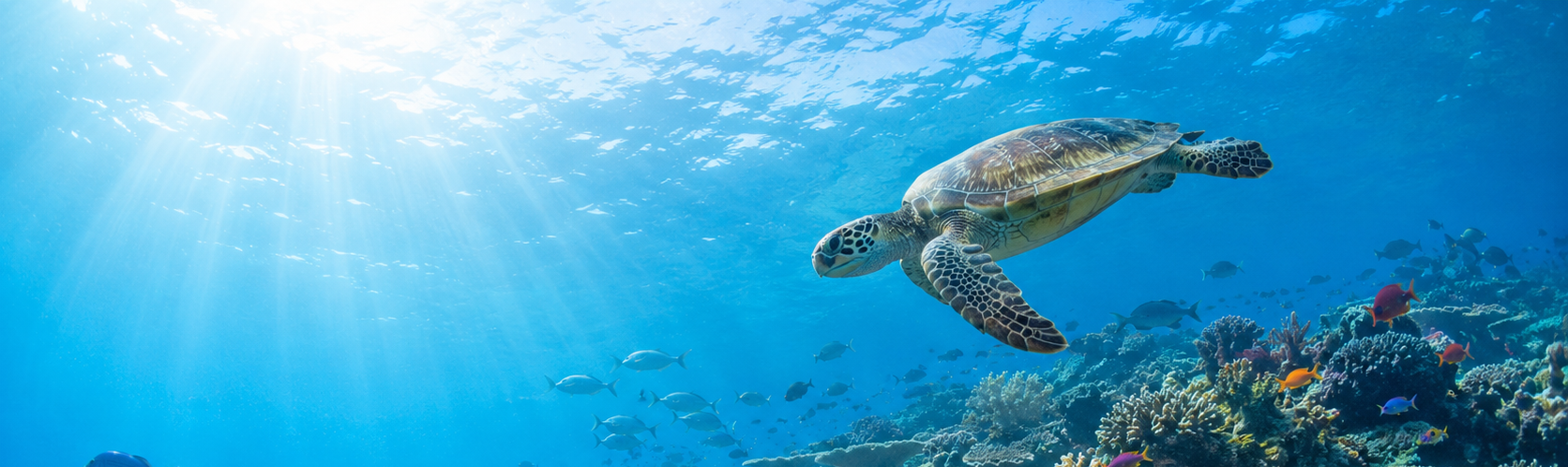
At its centre lies the Coral Triangle, encompassing Indonesia, Malaysia, Papua New Guinea, the Philippines, Solomon Islands and Timor-Leste. Although this core region covers only about 1.6 per cent of the world’s oceans, it supports approximately 76 per cent of all known coral species and 37 per cent of known coral reef fish species—around 2,228 species (Department of Climate Change, Energy, the Environment and Water [DCCEEW], 2024).
The wider realm includes the Great Barrier Reef—the world’s largest coral reef system—and the lagoons and barrier reefs of New Caledonia, which UNESCO recognises as one of the three most extensive reef systems on Earth. These places are not isolated natural attractions. They are parts of a connected network of coral reefs, mangroves, seagrass meadows, estuaries, islands, open water and coastal catchments (UNESCO World Heritage Centre, n.d.).

In This Article |
|
What is happening?
The Central Indo-Pacific remains extraordinarily rich, but its condition is not uniform. Some reefs retain high coral cover, intact food webs and strong populations of large fish. Others have been heavily altered by repeated heat stress, overfishing, pollution, sediment, coastal construction or destructive fishing.
It would be inaccurate to describe every reef in the realm as collapsing. It would also be inaccurate to assume that high coral cover means a reef is safe from future disturbance.
Quick Facts | |
Issue | Cumulative damage to coral reefs and connected coastal ecosystems, led by climate-driven ocean warming and marine heatwaves and worsened by local pressures. |
Place or ecosystem | Tropical seas of Southeast Asia, northern Australia, the Coral Sea, New Caledonia and parts of Melanesia. Important ecosystems include coral reefs, mangroves, seagrass meadows, estuaries and coastal wetlands. |
Causes | Ocean warming, marine heatwaves, unsustainable fishing, destructive fishing practices, sediment and nutrient runoff, pesticides, coastal development, habitat clearing, marine debris and pollution. Cyclones, disease and crown-of-thorns starfish outbreaks can add significant local pressure. |
Current trend | Moderate. Households and small organisations can reduce runoff, waste, emissions and direct disturbance. Larger threats also require coordinated government, industry, fisheries and international climate action. |
Who or what is affected | Reef-building corals, coral reef fish, sharks, rays, marine turtles, dugongs, whales, seabirds, molluscs, crustaceans, mangroves, seagrasses and many smaller organisms that support marine food webs. |
Evidence level | High that ocean warming, unsustainable fishing, habitat loss and poor water quality harm coral reef ecosystems. Confidence is generally moderate to high when predicting how several pressures will interact at a particular reef, because conditions differ between locations. |
Review status | The Coral Triangle’s governments identify climate change, unsustainable fishing, land-based pollution and coastal habitat conversion as increasing regional pressures. Great Barrier Reef assessments similarly identify warming oceans, severe cyclones, crown-of-thorns starfish, poor water quality and some fishing activities as cumulative threats (DCCEEW, 2024; Great Barrier Reef Marine Park Authority [GBRMPA], 2024). |
Understanding the Ecosystem in Plain Language
The Central Indo-Pacific is not one continuous coral reef. It is a vast collection of different habitats connected by tides, currents, migrating animals and flowing water.
A fish may begin its life among mangrove roots, feed in a seagrass meadow and later move onto a coral reef. Coral larvae can drift between reefs on ocean currents. Sediment, nutrients, rubbish and chemicals can travel from inland catchments through creeks and rivers before reaching estuaries and coastal waters.
This means that what happens on land does not always stay on land.
Coral reefs
Corals may look like colourful rocks or plants, but they are colonies of small animals called polyps. Most shallow-water reef-building corals live in partnership with microscopic photosynthetic algae inside their tissues.
The algae use sunlight to produce energy-rich sugars and share much of this energy with the coral. In return, the coral provides shelter and access to nutrients. This partnership supplies more than 90 per cent of the coral’s food requirements and helps it build a limestone skeleton (Australian Institute of Marine Science [AIMS], n.d.).
Over many generations, these skeletons form the complex reef structures that provide shelter, feeding areas and breeding sites for thousands of other organisms.
Mangroves
Mangroves are salt-tolerant trees and shrubs growing along tropical and subtropical shorelines. Their roots slow moving water, stabilise sediment and create sheltered habitat for fish, crabs, prawns, molluscs and birds.
Mangroves can also reduce coastal erosion and help protect shorelines from waves and storm conditions. Their accumulated soils store significant quantities of carbon, making them important coastal “blue carbon” ecosystems.
Seagrass meadows
Seagrasses are flowering plants adapted to life underwater. They form meadows on shallow seabeds, where they stabilise sediment, support food webs and provide nursery habitat for fish and crustaceans.
Seagrass is also an important food source for animals such as dugongs and green turtles. Healthy seagrass meadows connect coastal wetlands, mangroves and coral reefs while helping to maintain clearer water.
Why is the region so diverse?
There is no single explanation for the Central Indo-Pacific’s extraordinary biodiversity. Scientists consider it the result of several interacting conditions:
thousands of islands and an exceptionally complex coastline;
warm tropical waters;
shallow continental shelves beside deep ocean channels;
the meeting and mixing of waters from the Indian and Pacific oceans;
a wide variety of reef, mangrove, seagrass and estuarine habitats;
ocean currents that transport larvae between locations; and
a long evolutionary history in which species formed, moved and overlapped.
The result is a closely connected mosaic containing an unusually large number of habitats and ecological niches.
Why it matters
Damage to one part of the coastal environment can move through the wider system. A reef is not only a collection of coral colonies. It is part of a living connection between land, water, wildlife and people.
Plants
Mangroves and seagrasses provide shelter, food, nursery habitat, sediment stability and carbon storage. Microscopic algae living in coral tissues help power reef growth through photosynthesis.
When mangroves or seagrasses are cleared or damaged, animals lose feeding and breeding areas. Sediment may become less stable, and the connection between coastal wetlands and offshore reefs can weaken.
Soil
Healthy soil should remain on the land rather than washing into waterways.
When bare or disturbed soil erodes, fine sediment can travel through drains, creeks and rivers into coastal water. High sediment loads can reduce the light available to seagrasses and corals, settle on living coral surfaces and interfere with coral feeding, growth and reproduction.
Nutrients and agricultural chemicals may travel with the sediment. Research has repeatedly linked terrestrial runoff with changes in coral growth, recruitment, competition and reef community structure (Fabricius, 2005).
Water
Clear, well-oxygenated water supports photosynthesis, coral growth and healthy seagrass meadows.
On the Great Barrier Reef, sediment, nutrients and pesticides are the main catchment pollutants considered in water-quality management. Land-based runoff remains the greatest contributor to reduced water quality in affected inshore areas, although the sources and severity vary between catchments (GBRMPA, 2024).
Healthy reefs, mangroves and coastal vegetation can also reduce erosion and help buffer shorelines from waves. Their protection is therefore part of both biodiversity conservation and community hazard planning.
Wildlife
The Central Indo-Pacific supports an exceptional range of fish, corals, sharks, rays, turtles, dugongs, marine mammals, seabirds and invertebrates.
Many species depend on several habitats during their lives. Protecting an adult fish on a reef may not be enough if its mangrove nursery has been cleared or its seagrass feeding ground has declined.
The New Caledonian lagoons, for example, contain a continuum from mangroves to seagrasses and coral reefs and provide habitat for threatened fish, turtles, whales and one of the world’s largest dugong populations (UNESCO World Heritage Centre, n.d.).
Food
Coral reefs, mangroves, seagrasses and coastal waters support subsistence, recreational and commercial fisheries. The Coral Triangle also contains important spawning and juvenile growth areas for tuna and other commercially significant fish species (DCCEEW, 2024).
A global study found that the capacity of coral reefs to provide ecosystem services has declined substantially since the 1950s. It identified declines in living coral, reef-associated biodiversity and catch efficiency, with serious implications for communities that depend on reef fisheries (Eddy et al., 2021).
People
Marine ecosystems support employment, tourism, fishing, education, recreation, medicine, cultural knowledge and identity.
For many Indigenous and island communities, the sea is not separate from community life. It is Country or customary territory, a source of food and knowledge, and part of relationships maintained across generations.
Loss of marine habitat can therefore affect far more than wildlife numbers. It can affect health, livelihoods, cultural practices, food availability and the ability of people to remain in coastal communities.
Community resilience
A resilient community is better able to prepare for disturbance, respond to change and recover without losing its essential functions.
Healthy reefs and coastal vegetation contribute to resilience by:
reducing some wave and erosion impacts;
supporting local fisheries and food supplies;
sustaining tourism and employment;
maintaining biodiversity that may assist ecological recovery;
providing places for education, recreation and cultural practice; and
strengthening local knowledge, monitoring and cooperation.
Environmental resilience and community resilience are closely connected.
Main causes
It is important to separate well-supported direct causes from factors whose effects vary between locations.
Causes supported by strong direct evidence
Ocean warming and marine heatwaves
Climate-driven increases in ocean temperature are the main cause of large-scale mass coral bleaching. Heat stress can affect distant reefs at the same time, including reefs with relatively low local pollution or fishing pressure.
Reducing local pressures remains valuable, but local management cannot shield an entire reef from severe regional ocean heating. Long-term coral reef protection therefore requires both rapid reductions in greenhouse gas emissions and effective local conservation (AIMS, n.d.; Intergovernmental Panel on Climate Change [IPCC], 2022).
Unsustainable or destructive fishing
Excessive fishing can reduce breeding populations and alter food webs. The loss of herbivorous fish may allow algae to compete more strongly with young corals in some locations.
Fishing gear, anchoring and destructive methods may also physically damage coral, seagrass and other seabed habitats.
Land-based runoff
Sediment can shade or smother sensitive organisms. Excess nutrients can change algal growth and ecological competition. Pesticides and other contaminants can affect marine organisms directly or add to existing stress.
The effects are usually greatest near developed or intensively used catchments, particularly after heavy rain and flooding.
Coastal habitat removal
Clearing mangroves, filling wetlands, dredging seagrass meadows and modifying estuaries remove habitat and weaken connections between land and sea.
Development can also change water movement, sediment transport, salinity and the availability of nursery habitat.
Pollution and marine debris
Plastic, lost fishing gear and other debris can entangle or be swallowed by turtles, seabirds, marine mammals, sharks and rays. Pollution may also damage habitat or transport organisms and contaminants into new areas.
Contributing or location-dependent factors
The following factors can cause serious damage but do not affect every reef in the same way:
tropical cyclones and severe storms;
coral disease;
outbreaks of coral-eating crown-of-thorns starfish;
flood plumes and sudden reductions in salinity;
unusually calm, sunny conditions during periods of high temperature;
ocean acidification;
loss of nearby mangroves or seagrasses;
mining and sediment discharge;
poorly managed tourism;
invasive marine species; and
weak enforcement of fishing or protected-area rules.
Natural disturbances have always occurred. The concern is that reefs may now experience them while already weakened by warming, poor water quality or fishing pressure, leaving less time for recovery between events.
What the evidence shows
Marine scientists do not rely on a single photograph or one year of observations. Reef condition is studied using:
long-term underwater surveys;
aerial bleaching surveys;
satellite measurements of ocean temperature;
water-quality sampling;
fish and coral population counts;
coral-core temperature records;
genetic and reproductive research;
fisheries data;
habitat mapping; and
observations contributed by trained community members and reef users.
Bleaching is a warning, not an immediate declaration of death
Bleaching indicates that the coral is under significant stress. Some bleached colonies recover, while others die. The outcome depends on the temperature, duration of exposure, coral species, water quality, disease, depth and previous condition of the colony.
Coral cover can rise and fall rapidly
A reef may show increased coral cover during several favourable years and then lose a substantial proportion during one severe heatwave, cyclone or crown-of-thorns starfish outbreak.
This means a high coral-cover measurement should be understood as a current condition, not a guarantee of long-term security. The AIMS monitoring program describes increasing volatility on the Great Barrier Reef, with recent gains followed by sharp declines (AIMS, 2025).
Local action still matters
Improving water quality, protecting herbivorous and breeding fish, preventing habitat clearing and reducing direct coral damage can increase the ability of ecosystems to survive and recover from some disturbances.
However, these actions cannot replace climate mitigation. A clean, well-managed reef can still bleach during an extreme marine heatwave.
Recovery is not always a return to the previous ecosystem
Coral cover may increase while the mix of species changes. Fast-growing corals may return before slower-growing massive corals. Fish communities, reef complexity and ecological functions can also recover at different rates.
Scientists therefore assess more than the percentage of living coral. They examine species composition, colony size, fish abundance, habitat complexity, water quality and the frequency of disturbance.
Evidence confidence
There is strong scientific agreement that:
human-caused ocean warming is increasing coral-bleaching risk;
severe or prolonged heat can cause coral mortality;
excess sediment, nutrients and pollutants can damage inshore reefs and seagrasses;
unsustainable fishing changes fish populations and food webs;
mangrove and seagrass loss removes important habitat; and
multiple pressures can reduce the time and capacity available for recovery.
There is less certainty about exactly which individual reef will recover, which coral species will dominate in future or how quickly adaptation may occur. This uncertainty is a reason for careful monitoring and precaution—not a reason to delay action.
Avoid | Do This Instead |
[Repeating a claim without checking its source] | [State the source, date, place and evidence limits] |
[Taking an unsafe, illegal or harmful action] | [Use the safest lawful action and approved reporting pathway] |
[Using one solution for every place or species] | [Adapt the action to local conditions and guidance] |
What you can do at home
Household actions will not solve ocean warming on their own. They can, however, reduce local pressure, prevent avoidable pollution and build wider community support for effective environmental policy.
Home gardens
Keep soil on your property
Cover bare soil with mulch, groundcovers or suitable vegetation.
Slow runoff with garden beds, swales or rain gardens where appropriate.
Stabilise areas where soil regularly washes towards a drain or waterway.
Avoid moving loose soil immediately before forecast heavy rain.
Use fertilisers carefully
Apply only the amount plants need.
Follow label directions.
Avoid fertilising before heavy rain.
Keep fertiliser granules, compost and manure away from gutters and stormwater drains.
Reduce pesticide use
Identify the pest before treating it.
Use physical controls, hand removal and integrated pest management where practical.
Prevent spray drift and never pour leftover chemicals into soil, gutters or drains.
Dispose of unwanted chemicals through an approved local collection service.
Plant for water and habitat
Select locally appropriate native plants where possible.
Use plants to cover and stabilise soil.
Retain vegetation near waterways where lawful and suitable.
Do not plant declared invasive species.
Balconies and small spaces
Place saucers or trays beneath pots where drainage water could enter stormwater.
Do not tip concentrated fertiliser or pesticide solutions over balcony edges or into drains.
Secure lightweight pots, packaging and plastic items during wind.
Choose durable, reusable garden materials.
Sweep spilled potting mix rather than washing it into a drain.
Never release aquarium fish, snails, plants or water into outdoor waterways.
Schools
Schools can connect everyday land management with coastal health by:
creating a native rain garden or erosion-control demonstration;
completing litter and stormwater-drain audits;
monitoring school water, fertiliser and plastic use;
collecting repeat observations from a local creek, wetland or beach;
incorporating reef, mangrove and seagrass ecology into science activities;
inviting Traditional Owners, rangers or local researchers to share knowledge;
joining an approved citizen-science program; and
using collected information to guide practical improvements at the school.
On the Great Barrier Reef, the Eye on the Reef program allows visitors, schools and community members to contribute observations of reef health, wildlife, bleaching, pollution and crown-of-thorns starfish (GBRMPA, n.d.).
Community gardens
Community gardens can:
cover compost and loose soil before storms;
use nutrients according to plant need rather than a fixed routine;
install vegetated drainage areas where suitable;
keep wash water and fertiliser away from stormwater drains;
identify and control invasive plants responsibly;
provide bins for plastic ties, labels and broken equipment;
display simple catchment-to-coast education signs; and
record water, fertiliser and waste reductions as part of the garden’s environmental goals.
Local groups
Local groups can make the greatest difference when practical work is planned, repeated and connected with recognised monitoring or management programs.
Useful activities include:
regular beach, creek or wetland clean-ups;
recording the types and sources of collected rubbish;
reporting illegal dumping or damaged habitat;
joining approved water-quality, wildlife or reef-monitoring programs;
supporting sustainable fisheries and correctly managed marine protected areas;
improving local stormwater and erosion controls;
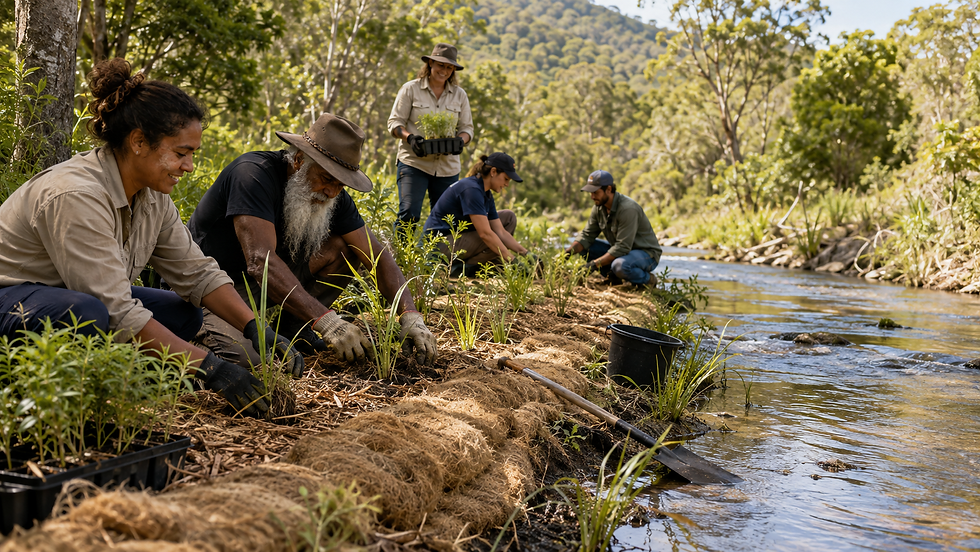
restoring native vegetation along waterways;
sharing verified environmental information; and
advocating for effective climate, water-quality and habitat policies.
What communities can do
Community-scale action can address problems that individual households cannot manage alone.
Manage the whole catchment
Councils, landholders, Traditional Owners, schools, businesses and community groups can work together to reduce erosion and pollution before it reaches the coast.
Projects may include:
revegetating stream banks;
repairing erosion;
protecting wetlands;
improving stormwater treatment;
reducing fertiliser and pesticide losses;
installing sediment controls at construction sites; and
monitoring waterways before and after major rain.
Protect connected habitats
Conservation planning should consider reefs, mangroves, seagrasses, estuaries and coastal wetlands as a connected system rather than unrelated sites.
Protecting only the offshore reef while clearing its nursery habitats or allowing severe catchment pollution is unlikely to deliver the strongest result.
Support Traditional Owner and community-led management
Traditional Owners and customary marine communities hold detailed knowledge of seasons, species, cultural sites and long-term environmental change.
Projects are more likely to be locally appropriate when Traditional Owners and affected communities are involved in defining priorities, collecting evidence, making decisions and sharing benefits.
Improve fisheries management
Useful measures may include:
science-based catch and size limits;
seasonal protection of breeding aggregations;
restrictions on destructive gear;
protection of nursery habitats;
effective no-take areas;
monitoring and enforcement; and
direct involvement of fishing communities in management.
The Coral Triangle Initiative identifies ecosystem-based fisheries management, effective marine protected areas, climate adaptation and improved threatened-species status as regional priorities (DCCEEW, 2024).
Restore habitat carefully
Mangrove, seagrass and coral restoration can be valuable when the original cause of damage has been addressed.
Planting or transplanting organisms into an area that still has poor water quality, unsuitable water movement or continued physical disturbance may fail. Restoration should be:
based on local science;
designed for the correct habitat;
undertaken with Traditional Owner and land-manager involvement;
supported by suitable permits;
monitored for several years; and
accompanied by action on the original cause of decline.
Build long-term monitoring
One-off observations are useful, but repeated monitoring is far more valuable for detecting change.
Community monitoring should use consistent methods, record dates and locations, store photographs responsibly and, where possible, contribute information to an established scientific or management database.
Conservation and Safety Notice |
Environmental laws and protected-area rules differ across the Central Indo-Pacific. Always check the requirements of the relevant national, state, provincial, customary or marine park authority before collecting organisms, fishing, undertaking restoration or disturbing habitat. |
In the Great Barrier Reef Marine Park:
zoning determines where fishing, collecting and other activities are permitted;
coral must not be damaged or collected, including dead coral, without an appropriate Marine Parks permit;
protected shells, turtles, eggs and protected fish must not be taken without legal authority; and
some research, tourism, restoration and commercial activities require permits.
Penalties can apply when zoning or permit requirements are ignored (GBRMPA, n.d.).
Do not:
stand on, kick, break or remove coral;
anchor directly onto reef habitat;
touch, chase, feed or crowd marine wildlife;
release aquarium plants, animals, live bait or aquarium water;
move marine organisms between waterways;
begin coral, mangrove or seagrass restoration without expert guidance and approval; or
remove material from protected areas because it appears dead or abandoned.
Boats, trailers, anchors, ropes, dive equipment and fishing gear can transport marine pests. Check equipment for attached organisms, rinse where appropriate, drain trapped water and allow equipment to dry before moving to another location. Dispose of removed biofouling on land where it cannot return to the water (Department of Agriculture, Fisheries and Forestry, 2025).
During clean-ups, wear gloves and enclosed footwear. Do not handle needles, chemicals, ammunition, unidentified containers or distressed wildlife. Mark the location and report hazardous material or injured animals to the appropriate local authority.
Evidence and Review | |
This article provides a beginner-friendly overview of the Central Indo-Pacific marine realm, with particular attention to the Coral Triangle, northern Australia’s tropical seas, the Great Barrier Reef and New Caledonia. It covers major connected habitats—including coral reefs, mangroves, seagrass meadows, estuaries and coastal catchments—and explains biodiversity, coral bleaching, water quality, habitat loss, fishing pressure, marine pollution and practical household or community actions. It does not provide a reef-by-reef condition assessment, country-specific fishing advice, detailed climate projections, restoration instructions, emergency wildlife advice or legal advice for every jurisdiction. | |
Geographic limits | The environmental information applies broadly to tropical coastal and marine ecosystems within the Central Indo-Pacific, particularly Indonesia, Malaysia, Papua New Guinea, the Philippines, Solomon Islands, Timor-Leste, northern Australia, the Coral Sea, New Caledonia and parts of Melanesia. The Coral Triangle biodiversity figures apply specifically to the six Coral Triangle Initiative countries rather than the entire Central Indo-Pacific realm. The Australian legal and biosecurity examples apply primarily to Australia and the Great Barrier Reef Marine Park; readers elsewhere must check their relevant national, provincial, customary and local requirements. |
Evidence level | Established: The region’s exceptional marine biodiversity; the effects of ocean warming and marine heatwaves on coral bleaching; the effects of habitat clearing, unsustainable fishing, pollution, sediment and poor water quality; and the ecological links between reefs, mangroves, seagrasses and coastal communities. Supported: The capacity of local water-quality, fisheries and habitat management to reduce avoidable pressures and support recovery. Emerging: Predictions about how quickly individual reefs will recover, which coral communities will dominate, and how adaptation or restoration interventions will perform under future warming. Community observation: Suitable for recording local conditions through recognised monitoring programs, but not used alone to establish regional trends or scientific conclusions. |
Confidence | High overall. The main biodiversity figures, ecosystem relationships and identified threats are supported by Australian Government agencies, UNESCO, long-term AIMS monitoring and peer-reviewed research. Confidence is high for broad regional conclusions, including that climate change is the greatest widespread threat to coral reefs and that local pressures can compound climate impacts. Confidence is medium for predictions concerning a particular reef or community because reef condition, exposure, species composition, governance and recovery capacity vary substantially between locations. |
Safety review | Draft-stage environmental, legal and biosecurity safety review completed by AI drafting assistant, 3 August 2026. The article includes precautionary guidance about coral collection, wildlife disturbance, aquarium releases, marine pests, chemical disposal, habitat restoration and hazardous marine debris. A final human review by an appropriately experienced Australian environmental content editor—or the relevant authority where jurisdiction-specific instructions are retained—is required before publication. The article must not be presented as legal, medical, emergency-response or site-specific restoration advice. |
Cultural rights check | Completed for general educational content. The article acknowledges Traditional Owners and customary marine communities without reproducing Traditional Knowledge, restricted knowledge, cultural stories, community statements, culturally significant locations or Indigenous language names. Permission is required before adding named communities, attributed cultural knowledge, quotations, photographs, artwork, maps of sensitive places or descriptions of cultural practices. Any future additions should be reviewed by the relevant Traditional Owners or recognised cultural authority. |
Last reviewed | 3 August 2026 |
Next review | 3 February 2027, or earlier if any of the following occurs: AIMS publishes its 2025–26 Annual Summary Report; the official status of the current global coral-bleaching event changes; significant new Coral Triangle or Great Barrier Reef research is released; relevant environmental, marine park or biosecurity laws change; or a factual correction is received. As at 3 August 2026, the latest report listed by the AIMS Reef Reports Hub is the 2024–25 Annual Summary Report. |
Reviewer | Shanti Plants Environment Content Reviewer |
Key Takeaways |
The Central Indo-Pacific is a connected living system in which coral reefs, mangroves, seagrasses, catchments, wildlife and communities depend on one another. Climate-driven ocean warming is the largest widespread threat, while pollution, habitat loss and unsustainable fishing can make local ecosystems less able to recover. Household and community actions can reduce avoidable pressures, but they must be supported by strong water-quality, fisheries, habitat and climate policies. Protecting the reef begins both at the shoreline and far upstream. |
References
Australian Institute of Marine Science. (2025). Annual summary report of coral reef condition 2024/25.
Australian Institute of Marine Science. (n.d.). What is coral bleaching?
Department of Agriculture, Fisheries and Forestry. (2025). Boat owner: Marine pest and disease biosecurity.
Department of Climate Change, Energy, the Environment and Water. (2021). Coastal ecosystems and habitats: Australia state of the environment 2021.
Department of Climate Change, Energy, the Environment and Water. (2024). Coral Triangle Initiative on Coral Reefs, Fisheries and Food Security.
Eddy, T. D., Lam, V. W. Y., Reygondeau, G., Cisneros-Montemayor, A. M., Greer, K., Palomares, M. L. D., Bruno, J. F.,
Ota, Y., & Cheung, W. W. L. (2021). Global decline in capacity of coral reefs to provide ecosystem services. One Earth, 4(9), 1278–1285. doi:10.1016/j.oneear.2021.08.016.
Fabricius, K. E. (2005). Effects of terrestrial runoff on the ecology of corals and coral reefs: Review and synthesis. Marine Pollution Bulletin, 50(2), 125–146. doi:10.1016/j.marpolbul.2004.11.028.
Great Barrier Reef Marine Park Authority. (2024). Great Barrier Reef Outlook Report 2024: An ecosystem under pressure.
Great Barrier Reef Marine Park Authority. (n.d.). What is Eye on the Reef?
Henley, B. J., McGregor, H. V., King, A. D., Hoegh-Guldberg, O., Arzey, A. K., Karoly, D. J., Lough, J. M., DeCarlo, T.
M., & Linsley, B. K. (2024). Highest ocean heat in four centuries places Great Barrier Reef in danger. Nature, 632, 320–326. doi:10.1038/s41586-024-07672-x.
Intergovernmental Panel on Climate Change. (2022). Climate change 2022: Impacts, adaptation and vulnerability—Summary for policymakers. Cambridge University Press.
Spalding, M. D., Fox, H. E., Allen, G. R., Davidson, N., Ferdaña, Z. A., Finlayson, M., Halpern, B. S., Jorge, M. A.,
Lombana, A., Lourie, S. A., Martin, K. D., McManus, E., Molnar, J., Recchia, C. A., & Robertson, J. (2007). Marine ecoregions of the world: A bioregionalization of coastal and shelf areas. BioScience, 57(7), 573–583. doi:10.1641/B570707.
UNESCO World Heritage Centre. (n.d.). Lagoons of New Caledonia: Reef diversity and associated ecosystems.
Keep Learning with Shanti Plants | ||
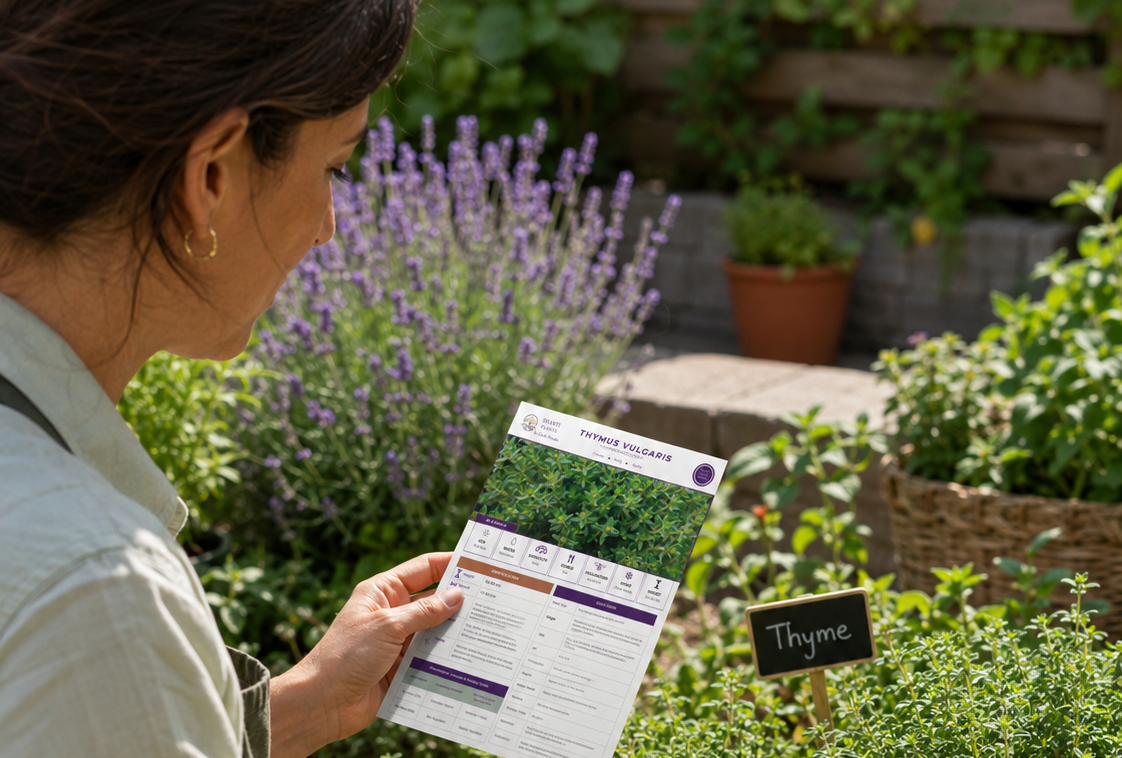 Download the complete plant profile for growing, safety and practical-use information. |  Watch our "How To" video and follow along as we identify, cultivate and harvest. | 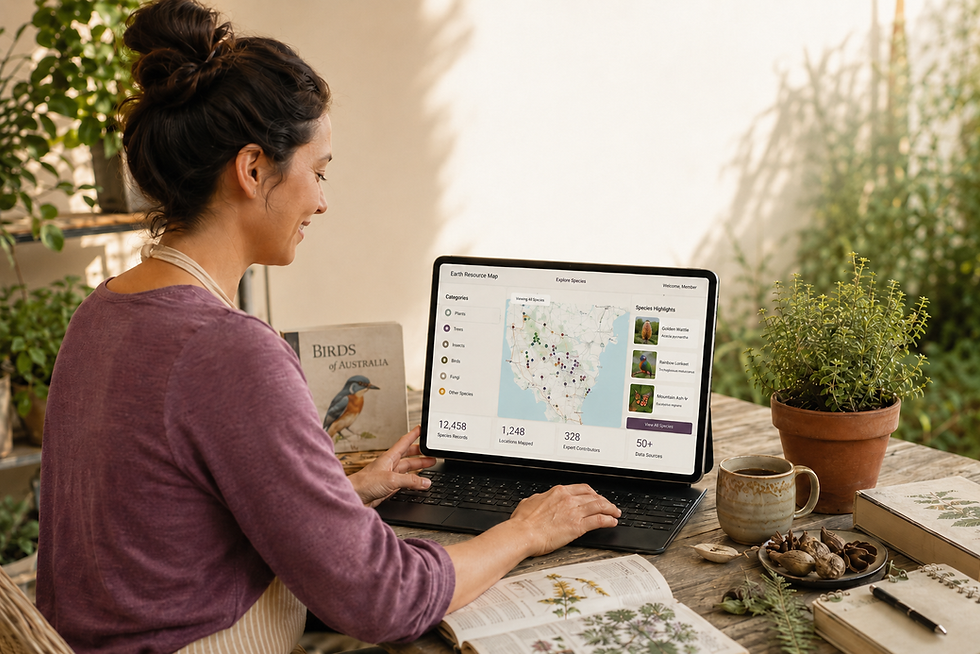 Become a member and get full access to all our verified species around the world. |
Shanti Plants | South East Queensland, Australia | © 2026 Shanti Plants


Comments