
Plant Materials & Traditional Uses
- Shanti

- 4 days ago
- 2 min read
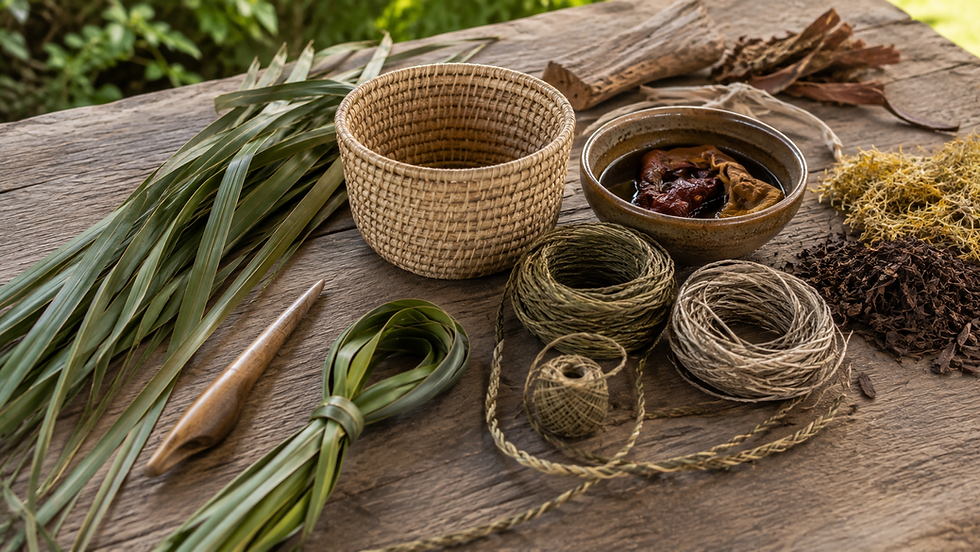
Plants provide fibres, wood, bark, resins, dyes, containers, tools, shelter materials and many other resources. The properties of a material depend on species, plant part, age, season, preparation and environment. Traditional knowledge also belongs to people and communities, not to the database that describes it.
What This Index Covers
This index covers publicly supported material uses, physical properties, harvest impacts, preparation, durability, safety, conservation, cultural authority and attribution. It separates documented historical use, current community practice, experimental testing and speculative claims.
Browse Resources
Browse the resource areas currently organised under this index. Links can be added as reviewed articles and records are published.
Fibres and cordage - Leaves, bark, stems and other materials prepared for flexible use.
Wood and structural materials - Species and parts used for tools, frames, fuel or shelter.
Dyes, tannins and pigments - Colour sources, mordants, handling and wastewater.
Containers and craft - Woven, carved, folded or assembled plant materials.
Resins, gums and other products - Documented non-food uses with handling limits.
Cultural authority - Community-controlled knowledge, attribution and permissions.
Read First
Before using these resources for identification, growing, harvesting, conservation, community work or other practical decisions, read:
A Documented Use Is Not Automatic Permission to Reproduce It
Plant Identity, Harvest Impact and Material Safety
Cultural Knowledge, Attribution and Benefit
Coverage and Evidence
Do not treat publicly described cultural knowledge as ownerless. Confirm whether the source and community permit reuse, teaching, commercialisation or detailed reproduction. Practical material claims need species and method evidence. Consider toxic sap, dust, smoke, splinters, fire, tool hazards and chemical mordants, and do not harvest wild material without permission.
The Earth's Resource Map and Learn library are being built progressively. Indexed means that a topic or resource can be connected to its identity, source and broad context; it does not mean that every claim has been verified or localised. Evidence is assessed claim by claim. Where information is missing, uncertain, restricted or location-dependent, that limitation should remain visible.
Last Reviewed
19 August 2026
This date records review of this index-page copy and its resource structure. Individual articles, records, laws, project details and evidence may have different publication and review dates.
Continue Exploring
References
Food Standards Australia New Zealand. Food safety basics. Accessed 19 August 2026.
Food Standards Australia New Zealand. Storing food safely. Accessed 19 August 2026.
Queensland Government. Harvesting protected plants. Accessed 19 August 2026.


Comments